What the law requires
The Electrical Safety Standards in the Private Rented Sector (England) Regulations 2020 apply to most private tenancies in England. They have covered new tenancies since 1 July 2020 and all existing tenancies since 1 April 2021.
Landlords must make sure the fixed electrical installation in each rented home is inspected and tested by a qualified and competent person at least every five years, or sooner if the previous report says so. The result is recorded on an Electrical Installation Condition Report, usually called an EICR.
Who needs a copy, and by when
| Who | Deadline |
|---|---|
| Existing tenants | Within 28 days of the inspection |
| New tenants | Before they move in |
| Prospective tenants who ask | Within 28 days of their request |
| The local housing authority, if it asks | Within 7 days of the request |
| The next inspector | Keep a copy to give them at the next inspection |
What happens if the report is unsatisfactory
An EICR is unsatisfactory if it records any C1 (danger present), C2 (potentially dangerous) or FI (further investigation required) observation. What each code means.
Where remedial work or further investigation is required, the landlord must have it carried out within 28 days, or sooner if the report specifies a shorter period. Within 28 days of the work being finished, the landlord must give written confirmation that it has been completed to the tenant and to the local housing authority.
C3 observations (improvement recommended) do not make a report unsatisfactory and do not have to be fixed under the regulations, although they are often worth doing at the same time.
Penalties
Local housing authorities can serve remedial notices, arrange urgent work themselves and recover the cost, and impose financial penalties of up to £30,000 for each breach.
Which tenancies are covered
The regulations apply to most assured shorthold tenancies, licences to occupy and houses in multiple occupation (HMOs). They do not apply to lodgers living with their landlord, long leases of seven years or more, student halls, hostels, care homes or hospitals.
The government has also legislated to extend equivalent five-yearly electrical safety checks to social housing in England. Housing providers should confirm the commencement dates that apply to each of their tenancies.
What an EICR covers
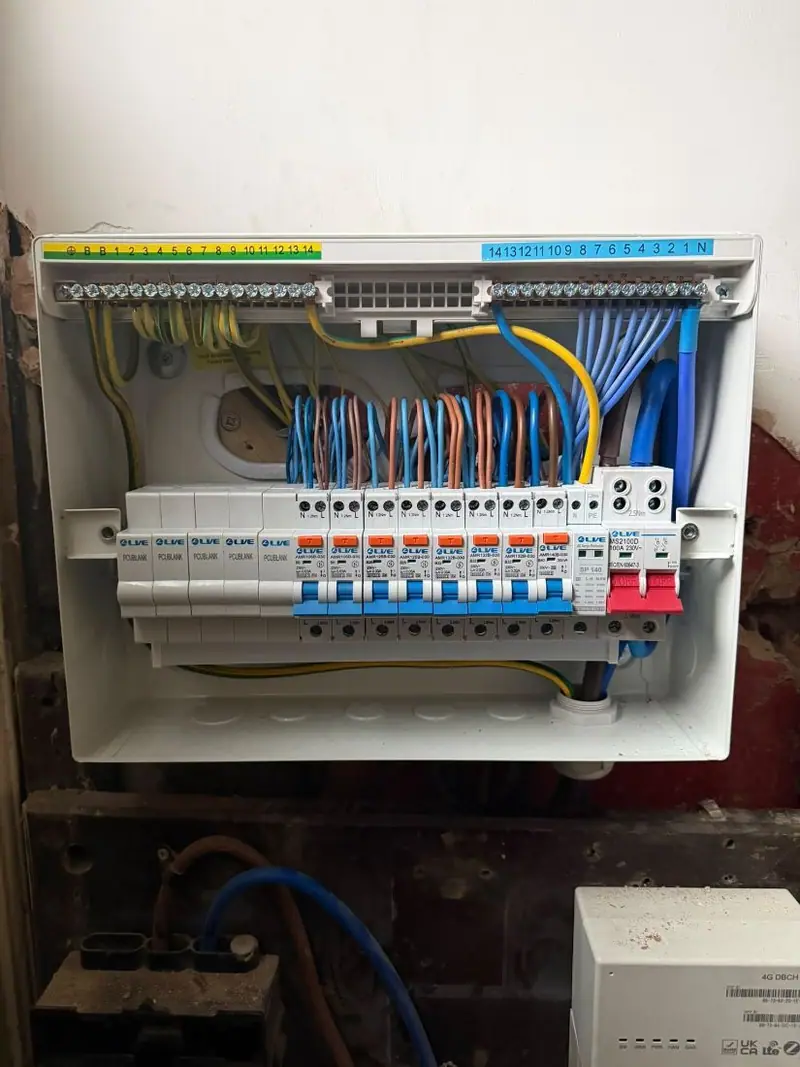
An EICR checks the fixed installation: the consumer unit, wiring, sockets, switches, light fittings, earthing and bonding. It does not test portable appliances. Landlords who supply appliances should still keep them safe, and a portable appliance test (PAT) is a common way to show that.
Most EICRs on a typical rented home take a few hours and require the power to be off for part of that time, so tenants need notice.
How we help landlords
Mister Electrics carries out landlord EICRs across Greater Manchester and Cheshire East, prices every C1, C2 and FI observation as a fixed line item, and completes remedials well inside the 28 days. Written confirmation for the tenant and council is included. For portfolios, our free 48 hour compliance review maps every due date across your properties.
Questions
How often does a landlord need an EICR in England?
At least every five years, or more often if the previous EICR recommends a shorter interval. A new EICR is not needed for each new tenancy if the current report is still in date.
How long do landlords have to fix EICR faults?
28 days from the inspection, or less if the report says so, for any C1, C2 or FI observation. Written confirmation that the work is done must go to the tenant and the council within 28 days of completion.
What is the fine for not having an EICR?
Local housing authorities can impose a financial penalty of up to £30,000 per breach of the regulations.
Does a landlord need a new EICR after remedial work?
Not usually. The remedial work is certificated with an Electrical Installation Certificate or Minor Works Certificate, and those plus the written confirmation of completion show the report has been acted on.
Need it done? Call 07703 295654, answered 24/7, or request a free compliance review for a portfolio.